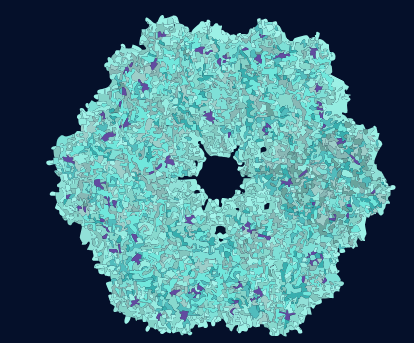
Protein architecture
Many heme proteins depend on precise folding, assembly, and cofactor incorporation. Production has to account for the complete functional structure, not sequence alone.

Synfera develops production approaches for complex heme proteins. We combine protein engineering and precision fermentation to pursue useful material for internal products and partner programmes.
Heme proteins use an iron-containing cofactor to perform functions that include gas transport, electron transfer, catalysis, and sensing. Their utility is broad, but producing a correctly assembled and functional protein can be technically demanding.
What are heme proteins?Every target is different. Synfera begins with the protein, application, and evidence needed rather than offering a one-size-fits-all catalogue.
Many heme proteins depend on precise folding, assembly, and cofactor incorporation. Production has to account for the complete functional structure, not sequence alone.
The heme cofactor is central to function. A useful production strategy must support both the protein and the chemistry that gives it activity.
The right expression and preparation approach depends on the target protein, intended use, development stage, and material requirements.
Synfera's work on the extracellular oxygen-carrying protein erythrocruorin led to Aerus, our first product programme. It remains a focused example of the complex heme proteins we aim to produce.
We welcome early conversations with biotechnology teams, researchers, and strategic partners. An inquiry starts a technical discussion and feasibility review; it does not guarantee capacity, timing, or project acceptance.
Share the target, intended application, current construct, and the questions the material needs to answer.
Synfera reviews technical fit and identifies the information needed for a potential feasibility programme.
Where there is a fit, the teams define a scoped collaboration with clear objectives and next steps.